Roof Leak Insurance: When Coverage Applies and How to Claim It
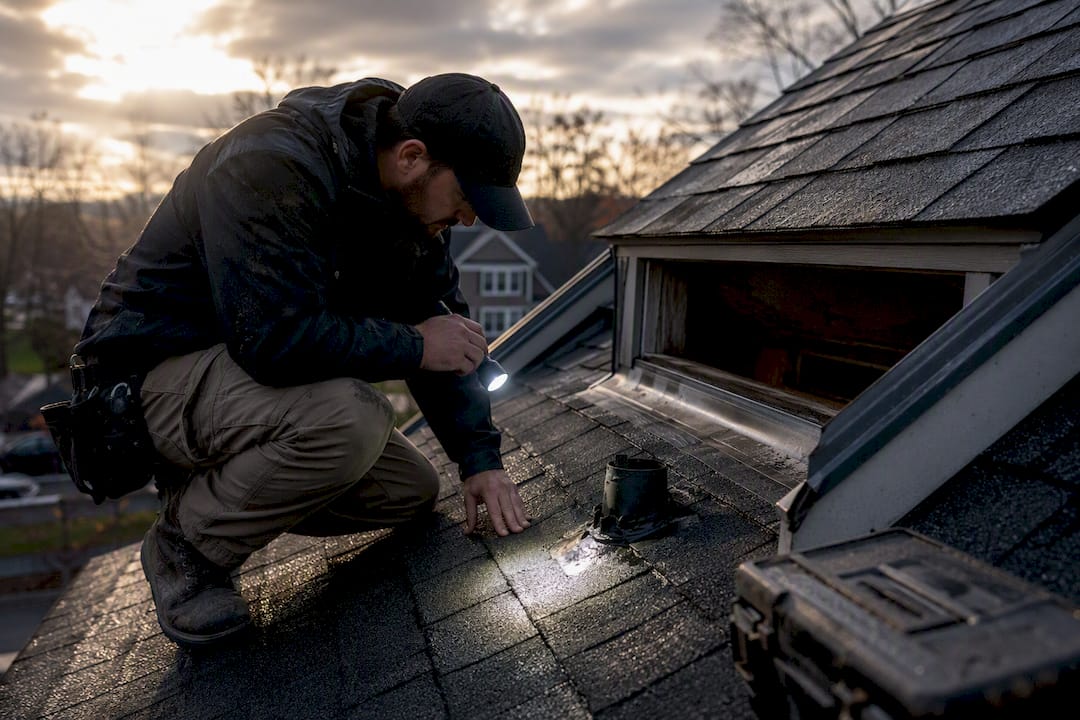
A roof leak is generally covered by homeowners insurance when a sudden, identifiable event causes it, like a windstorm, hail, or a fallen tree. It’s typically not covered when the cause is age, neglect, or gradual wear. Before you do anything else, work through three moves.
- Document it now. Take timestamped photos and video of the leak, the water path, and any visible roof damage from outside if it’s safe to do so.
- Stop the bleeding. Place buckets, tarp the affected area, and keep every receipt. This is a contractual obligation, not a courtesy, and skipping it can sink an otherwise solid claim.
- Call your insurer and get a claim number. Report it the same day if you can.
Pro Tip: Check your deductible and dwelling coverage limit before you file. If the damage is likely to cost less to repair than your deductible, filing may do more harm than good.
Key Takeaways
Coverage for a roof leak depends entirely on whether the cause was sudden and covered or gradual and excluded, and documentation decides which one an adjuster concludes.
| Point | Details |
|---|---|
| Coverage hinges on cause | Storms, hail, fire, and fallen trees are typically covered; wear, age, and neglect are not. |
| Document before you touch anything | Timestamped photos, video walkthroughs, and receipts protect your claim from denial. |
| Mitigation is required, not optional | Tarping and temporary repairs must happen fast, with proof kept for the adjuster. |
| File only when it clears the deductible | Minor repairs near your deductible rarely justify the claim or the renewal risk. |
| Bring in an audit when disputed | An adjuster-led review can counter “preexisting condition” denials with real evidence. |
Table of Contents
- When Is a Roof Leak Covered by Insurance?
- What Parts of the Damage Does the Policy Actually Pay For?
- How Do You File an Effective Roof Leak Claim?
- Is Filing a Claim Actually Worth It?
- When Should You Bring In an Adjuster-Led Audit?
- What If Your Roof Leak Claim Gets Denied?
- Get an Expert Audit Before You Accept a Low Settlement
- What Homeowners Get Wrong About Roof Leak Claims
- Sources
When Is a Roof Leak Covered by Insurance?
Insurers draw a hard line between damage from a covered peril and damage from gradual deterioration. A covered peril is a specific, sudden, identifiable event. Gradual damage builds slowly over months or years, and standard homeowners policies exclude it almost universally. The insurer’s adjuster is trained to determine which category your leak falls into, and that determination decides the entire outcome of your claim.
Homeowners insurance usually covers roof leaks caused by a sudden, accidental event such as a storm or fallen tree, but it generally won’t pay for leaks tied to neglect, age, or normal wear and tear. That single sentence is the entire logic of roof leak insurance.
Perils usually covered:
- Windstorm and tornado damage
- Hailstorms that crack or bruise shingles
- Fallen trees or large limbs
- Fire and smoke damage
- Weight of ice, snow, or sleet
Circumstances usually excluded:
- General wear and tear, aging shingles, or granule loss
- Lack of maintenance (clogged gutters, unaddressed moss growth)
- Faulty original installation or workmanship
- Flood and earth movement (these require separate policies entirely)
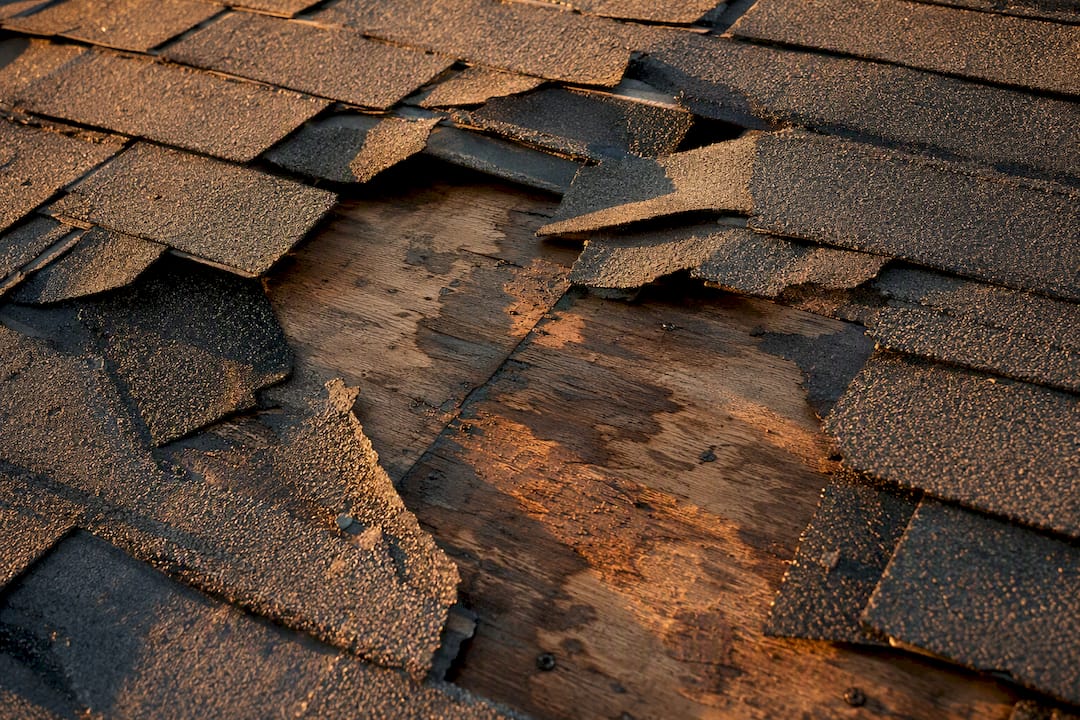
Two scenarios illustrate the gray zone. First: a storm rips off a section of shingles that were already brittle from age. The insurer may argue the underlying weakness, not the storm, is the real cause, and pay only partially or deny the claim. Second: a healthy tree falls on your roof during a windstorm with no prior signs of rot or hazard. That’s about as clean a covered-peril case as exists. The difference between those two outcomes often comes down to the documentation you have on hand before the adjuster ever shows up.
What Parts of the Damage Does the Policy Actually Pay For?
A roof leak claim rarely stops at the roof. Coverage often extends across four separate categories of your policy, each with its own limits and rules.
- Dwelling coverage pays for structural roof and interior repairs, subject to your policy limit and deductible. This is the core of most claims.
- Personal property coverage reimburses damaged belongings, furniture, electronics, flooring. Keep receipts or estimated replacement values for anything soaked or ruined.
- Loss of use coverage kicks in if the home becomes unsafe or unlivable, covering hotel stays and extra living costs while repairs happen.
- Other structures coverage may extend to a detached garage or shed if the same storm damaged them.
- Mold coverage is the trickiest. Most policies pay for mold remediation only when it’s a direct result of a covered peril and you addressed it promptly. Mold from a leak you ignored for three weeks is a different story, and insurers know how to spot that timeline.
Deductibles on these policies commonly run between $500 and $2,000, which matters more than most homeowners realize when they’re deciding whether a claim is even worth filing. A $1,200 repair against an $1,000 deductible barely moves the needle. A $14,000 interior loss with structural damage is a different calculation entirely.
How Do You File an Effective Roof Leak Claim?
Filing well is a process, not a phone call. Here’s the order that actually protects your payout.
- Secure the scene safely. Never climb a wet or damaged roof. Place tarps, buckets, and towels to limit water spread from the ground or attic access point.
- Photograph and video everything before touching anything. Multiple angles, wide shots and close-ups, and a slow video walkthrough of every affected room. Timestamps matter.
- Perform emergency mitigation and save every receipt. Tarp purchases, a plumber’s emergency visit, a wet-vac rental. All of it counts as proof you met your mitigation obligation.
- Pull your records before you call. Prior roof inspection reports, maintenance invoices, and any contractor notes help rebut a “preexisting condition” finding before it even comes up.
- Report the claim promptly. Call your insurer, get a claim number, and note the date, time, and the name of whoever you spoke with.
- Expect an adjuster inspection within days to two weeks, though large-scale disasters can cause claim surges that push timelines back. If your area was hit by a regional storm, build in patience and check FEMA’s individual assistance program if your insurer is badly delayed.
- Walk the adjuster through the facts, not your history with the roof. Describe the triggering event and the visible damage. Skip commentary like “we’ve noticed some slow leaking for a while” or “we’ve been meaning to get that fixed.” What you say matters as much as what you show.
- Ask for an itemized estimate, not a lump-sum figure. Itemized estimates are easier to dispute line by line if something looks wrong.
- If the payout feels low or the claim gets denied, get a second opinion before signing anything. An independent roof assessment or adjuster-led audit can catch scope the carrier’s estimate missed.
Pro Tip: Save every email and letter from your insurer in one folder, even the boring ones. If you end up disputing a decision, that paper trail is often the deciding factor.
Is Filing a Claim Actually Worth It?
Not every leak deserves a claim. Run the math before you call.
- Compare the repair estimate to your deductible. If a licensed roofer quotes $900 and your deductible is $1,500, filing gains you nothing and puts a claim on your record for zero payout.
- Weigh renewal risk. Multiple claims in a short window can raise your premium at renewal or, in some cases, lead to nonrenewal. Insurers track claim frequency, not just severity.
- Use a rule of thumb: file when the loss is structural, involves interior damage, or clears the deductible by a wide margin. Skip filing for minor cosmetic shingle damage you can pay out of pocket.
- Get an independent estimate first if the cause is disputed. When structural repair costs land well above the deductible and interior damage is present, filing is usually the financially sound move even accounting for possible premium changes.
A $700 shingle repair rarely justifies the paperwork. A $9,000 roof-and-ceiling repair almost always does.
When Should You Bring In an Adjuster-Led Audit?
Some claims are straightforward. Others get stuck the moment a carrier’s adjuster flags “preexisting damage” or lowballs the scope of repair. That’s the exact situation Patton Roof Systems was built around, led by Jason Patton, a former insurance adjuster who now sits on the homeowner’s side of the table.
An adjuster-led audit typically documents three things a standard homeowner claim often lacks:
- A clear cause analysis connecting the storm or event to the specific point of failure on the roof.
- A scope report linking the roof damage to interior losses, so the ceiling stain and the warped flooring don’t get quietly dropped from the estimate.
- An itemized cost build-up that mirrors how carriers price repairs internally, making it far harder to dismiss as inflated.
Independent audits are especially effective when a carrier leans on a “preexisting condition” argument to deny or shrink a payout. Before contacting a specialist, gather your photos, maintenance records, and any written correspondence from the insurer. Patton Roof Systems uses that material to build a counter-case grounded in the same standards carriers use to evaluate claims in the first place.
What If Your Roof Leak Claim Gets Denied?
A denial isn’t final. Insurers issue a written explanation citing the specific policy language they relied on, and that letter is your starting point. Read it carefully. Denials often hinge on one contested fact: whether the cause was sudden or gradual, whether mitigation happened fast enough, or whether the damage predates the policy period.
Start with a formal appeal through your insurer’s internal review process. Most carriers have a dedicated appeals unit separate from the adjuster who issued the denial. Submit new evidence if you have it: an independent inspection report, additional photos, contractor statements, or weather data confirming a storm hit your area on the date claimed. Reference the denial letter’s specific reasoning point by point rather than restating your whole story from scratch.
If the internal appeal fails, escalate to your state’s department of insurance. Every state has a consumer complaint process, and filing one puts your case in front of a regulator, not just the company that denied you. The NAIC’s consumer resources explain how that process works state by state.
Keep every piece of correspondence dated and organized throughout. If the dispute involves real money, an independent adjuster-led audit before you appeal can turn a vague disagreement into a documented, line-item rebuttal the insurer has to address directly.
Get an Expert Audit Before You Accept a Low Settlement
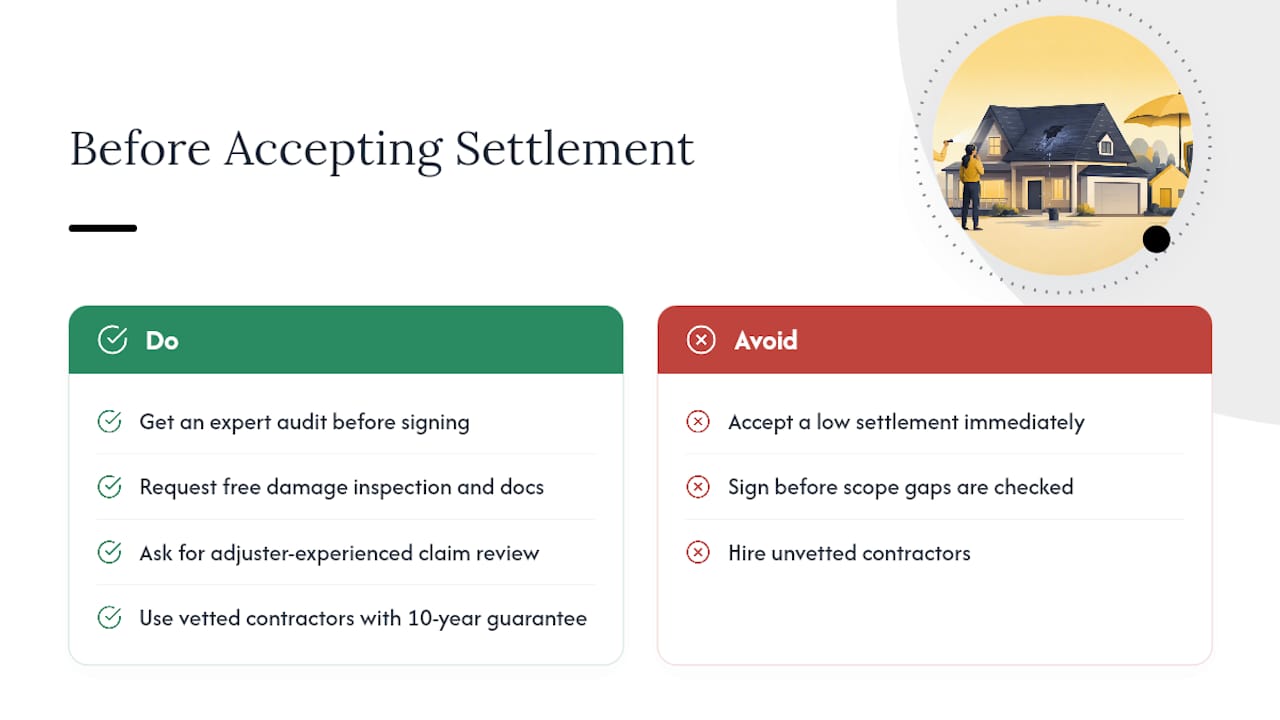
A denied or underpaid roof leak claim rarely stays that way once someone with adjuster experience reviews the file. Patton Roof Systems offers free damage inspections and builds claim documentation the way carriers themselves evaluate losses, because that’s exactly the background Jason Patton brings to every audit. Homeowners who bring in a specialist before signing a settlement tend to catch scope gaps the original estimate missed entirely.
If your claim is stuck, disputed, or you simply want a second set of eyes before you file, Patton Construction’s claim consulting team can assess the damage, build the documentation, and connect you with a vetted contractor network backed by a 10-year craft guarantee.
What Homeowners Get Wrong About Roof Leak Claims
Most advice on this topic treats filing a claim like a paperwork exercise: take photos, call the insurer, wait. That misses the part that actually decides outcomes, which is that adjusters are trained to find a reason to categorize damage as gradual rather than sudden, because gradual damage costs the carrier nothing.
The conventional wisdom says “document everything,” which is true but incomplete. What matters more is documenting the right things: proof of prior maintenance, a clear timeline, and language that describes events rather than history. Homeowners lose claims not because the damage wasn’t real, but because they handed the adjuster an easy preexisting-condition argument without meaning to.
If there’s one thing to prioritize first, it’s getting your maintenance records and prior inspection history organized before you ever pick up the phone. That single habit does more to protect a payout than any amount of after-the-fact photography.
Sources
- Does homeowners insurance cover roof leaks? | Progressive
- Does Homeowners Insurance Cover Roof Leaks? | GEICO
- Does Homeowners Insurance Cover Roof Leaks? | NerdWallet
- Leaking roof: what to do | Mercury Insurance
- FEMA individual assistance program
Recommended
- Patton Construction — Elite Adjuster-Led Roofing Consulting & Restoration ManagementWhat to Do About an Emergency Roof Tarp After Storm Damage
- How to Identify Hail Damage on Your Roof After a Georgia Storm
Created with BabyLoveGrowth tools
Suspect Hail Damage on Your Roof?
Patton Roof Systems provides zero-obligation digital roof inspections with complete photo documentation for insurance adjusters across Georgia.
Schedule Your Free Roof Inspection →